
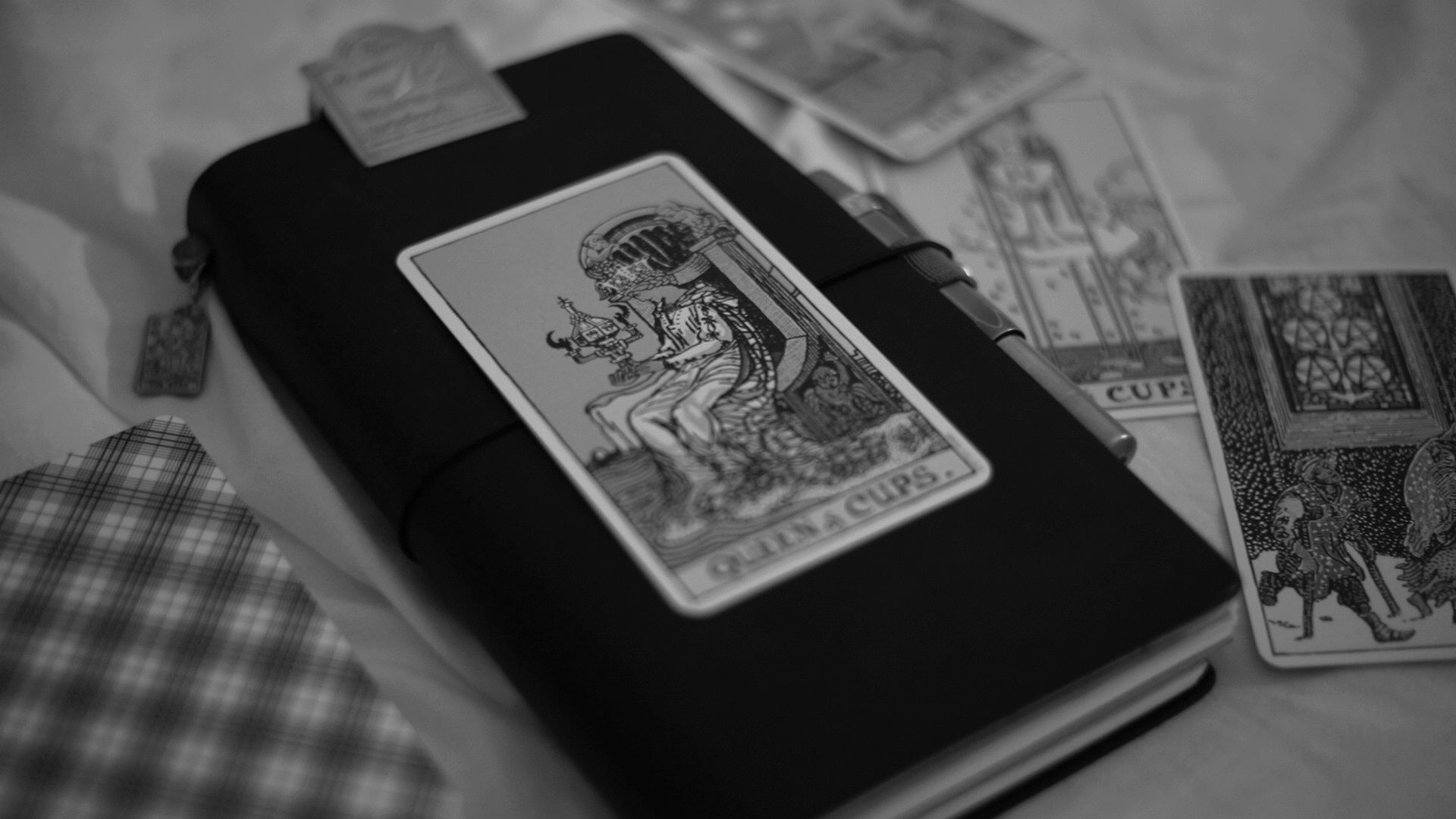
Have you ever experienced that moment where you don’t even know what you’re feeling? Let the tarot help you spell it out!
When we think about the tarot, we normally associate it with fortune-telling or divination that aims to answer specific questions about an external situation, such as “Will he/she get back together?” or “How can I get the promotion to make more money?”
Those are all valid questions and are very common in the field, frankly these are the bread and butter questions for majority of cartomancers and diviners. In fact, the tarot’s long and rich history of fortune-telling is something to be admired for its resilience, especially those who practice it out of necessity, like the Roma People. However, this shall be discussed on a different post. Today, I would like to share my personal experience with using the Tarot for Self-Expression and Personal Articulation.
Recently, the rise of more contemporary approaches to cartomancy that leans heavily on the psycho-spritual have opened up a lot of doors to more introspection and meditation using the cards. The amazing works of Jessica Dore, Lindsay Mack, and Brittany Muller to name a few, have made the practice of reading the cards for self-analysis and improvement part of the tradition.
Personally, I have found that the most useful way I use cartomantic tools, specifically tarot, is in self-expression and personal articulation. I understand that these sound like buzzwords, but truthfully it best describe the way the cards help me express or articulate feelings, emotions, thoughts, and concepts that I found difficult to do on my own.
I would normally use this style of reading whenever I feel lost or weird. You know that feeling like you can’t seem to pinpoint what you’re feeling or you can’t explain the heaviness in your chest? In these moments, I am at a loss for words yet I know that I need to express whatever hot mess of feelings and thoughts inside. That is where I would get my pack of cards and start dealing them out to see what is going on internally for me.
Mind Body and Spirit Spread
I would normally use the Mind, Body, and Spirit spread, which is such a classic and super helpful method for me to get right at the bottom of things. For this simple spread, I would ask the question:
“What are the messages from my Mind, Body, and Spirit for me at this time?”
Each card will act as a sounding board for my Mind, Body, and Spirit, which helps me listen to what each part of myself needs. This is where my conscious, subconscious, and unconscious express themselves and where I would normally find the feelings and words that help define the internal issue I am experiencing.
As an example, I drew the 4 of Pentacles for the position of Mind; The Tower for the position of Body; and Page of Wands for the position of Spirit. I would read it as follow:
“Your mind is telling you that it wants you to protect what’s valuable to you and create boundaries if necessary (4 of Pentacles). Your body wants you to be more careful and be cautious about the things that you consume or do with it because it could lead you to sudden shifts (The Tower). Your Spirit is inviting you to be more curious about your creative pursuit and to encourage imagination and play (Page of Wands).”
Using the information that I have gained, I can now act accordingly to resolve any warnings or suggestions that were offered, or just make peace with what I am going through and surrender to its ebb and flow.
Other Ways
Aside from the Mind, Body, and Spirit spread you can also venture into other ways of articulation through the language of the cards:
- One-Card: You can draw one card with the prompt of “What am I feeling right now?” or “What is the source of this feeling?” and interpret it accordingly. This is helpful if you just want a quick and snappy way of dealing with your emotions.
- 2-Cards: You can create prompts that could cater to whatever it is you want to know. Personally, I like the “Do and Don’t” prompt and I treat it as suggestions rather than prescriptions.
- Narrative Sequence: You can even drop the prompts and just sling the cards without any prompts for each position, and just read the flow of the story. You might find parallels that could be helpful for you.
Benefits
Using cartomancy tools for this purpose helps me find the words for the undefined issues I am struggling with; it helps me be more curious about what was revealed; and it aids me in finding the solutions or actions that I need to take to resolve or make peace with it.
One of the greatest teachings Lindsay Mack of The Tarot for the Wild Soul has shared is the idea that we don’t need to come to the cards with positive or clear vibes. We’re human beings, wo we’re naturally imperfect and we get messy. Sometimes this leads us feeling overwhelmed and/or numbed out that we don’t even know why we’re feeling a certain way. It is in the most vulnerable or scattered times we actually need the guidance of the archetypes and stories from the cards.
Give reading the cards for self-expression a go and see for yourself how it could improve your life or at the very least your outlook on the situation. The reflective power of the tarot archetypes can open up your eyes to what is and what you can do about it.
Leave a Reply